A Night in the Woods of My Childhood's Hoods
I made a point in my last essay to distinguish between the behaviors of a hater versus a thoughtful critic. Ironically enough I was clearly approaching this issue from the hater perspective. The essay almost entirely focused on negative examples of the phenomenon instead of exploring positive alternatives. In fact, a good number of my essays (the becoming uncringe series in particular) are framed primarily as a reaction or critique of some behavior that I find wrong rather than pointed advocacy for some behavior I find optimal. In the spirit of abjuring hypocrisy and putting one’s money where one’s mouth is—which are things we are big fans of over here at sambish.com—I wish to produce some works of literary criticism that bring something new to the conversation while paying respect to the effort and intentions of the subject of the critique.
The following is my first attempt at this.
I: In Which I Establish My Gamer Cred
I grew up in a family that practiced a sort of dismissive moralizing toward video games. It was ridiculous because this attitude only applied to gaming consoles and handhelds (addictive luxury boondoggles for wastrels) but not games on computers (serious business machines for serious businesspeople). We had a huge library of computer games on our Power Mac G3. But when we won a Game Cube in a corporate raffle it was silently removed from the premises only weeks later, discreetly smuggled to my uncle for safekeeping. There was no way the precious little children of the Bishop household would become horrid gamers. A full decade later one of my cousins was showing me his collection of Game Cube classics and I realized we were playing them on my Game Cube!
But my family was fighting yesteryear’s culture war. Video games had completely saturated the youth culture around me at that point. In elementary school I would go to my friends’ houses and play Tony Hawk and Battlefront on their Playstations, Donkey Kong and Mariokart on their N64s, Sonic Heroes and Smash Bros on their Game Cubes, Pokemon and Advance Wars on their Gameboys and DSes. Years later we received a Nintendo Wii on Christmas from a generous anonymous gift-giver who had taken pity on our humble economic position and lack of gamer cred. But our paltry assortment of Lego games didn’t sate my appetite and I continued greedily partaking of my friends’ games on offer well into middle and high school, except now I was interested in Zelda and Minecraft and Skyrim and Uncharted. A major portion of my friendships consisted almost exclusively of me demanding to play their games. Maybe I was lowkey not a very fun friend to have over. I think I was helplessly drawn toward video games as a rebellious act. It was certainly the case that my father’s frequently expressed hatred of rap music led me to becoming the hip hop head I am today.
I don’t even know if I disagree with the common cultural conservative critiques of video games. Yeah, they kinda are a waste of money and time. So are most other mediums of entertainment, but a video game tends to cost more money and a lot more time than a movie (though if you’re optimizing for pure dollar cost per hour, buying a video game at release is usually a better deal than seeing a movie in theaters). Maybe video games are quite a bit more habit-forming than previous forms of entertainment, though social media has since stolen that crown. Maybe there is a just a bit of bonus moral rot that comes with willfully acting out anti-social behaviors (GTA) instead of just observing them (Breaking Bad).
But what I think the anti-gamers failed to consider is why so many rational individuals seem eager to brave these downsides, even with a perfect knowledge of them. Perhaps because games are one of the purest, most compelling, most complete art forms to grace humanity?
It was my senior year of high school that I really started getting on the “games are art” wagon. I think we’ll look back on the fact that there was a time this wasn’t a settled question with great bemusement. Maybe we’ve already arrived. I pivoted from ravenously trying to play my friends’ games to striving to become conversant about the medium at large by watching video essays. I gravitated toward longwinded exegeses and analyses:
This course of study had the effect of centering my interest on those games that are perhaps more fun to discuss than to play. Heavy on the literary themes and social commentary and character drama while the minute-to-minute gameplay isn’t necessarily gripping, maybe even poorly executed. You know, like Spec Ops: The Line or sundry walking simulators.
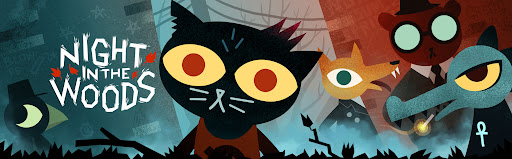
Night in the Woods is one of those narrative over gameplay games. But it took me a second playthrough to see the warts. The first time around, I came away feeling like it was a genuine masterpiece. I now realize this was because the game cheated and psychologically manipulated me into liking it by being tailored exactly to me and the stage of my life I was in. I find it almost disturbing how perfect of a match it was.
II: Shattered Across Time and Space
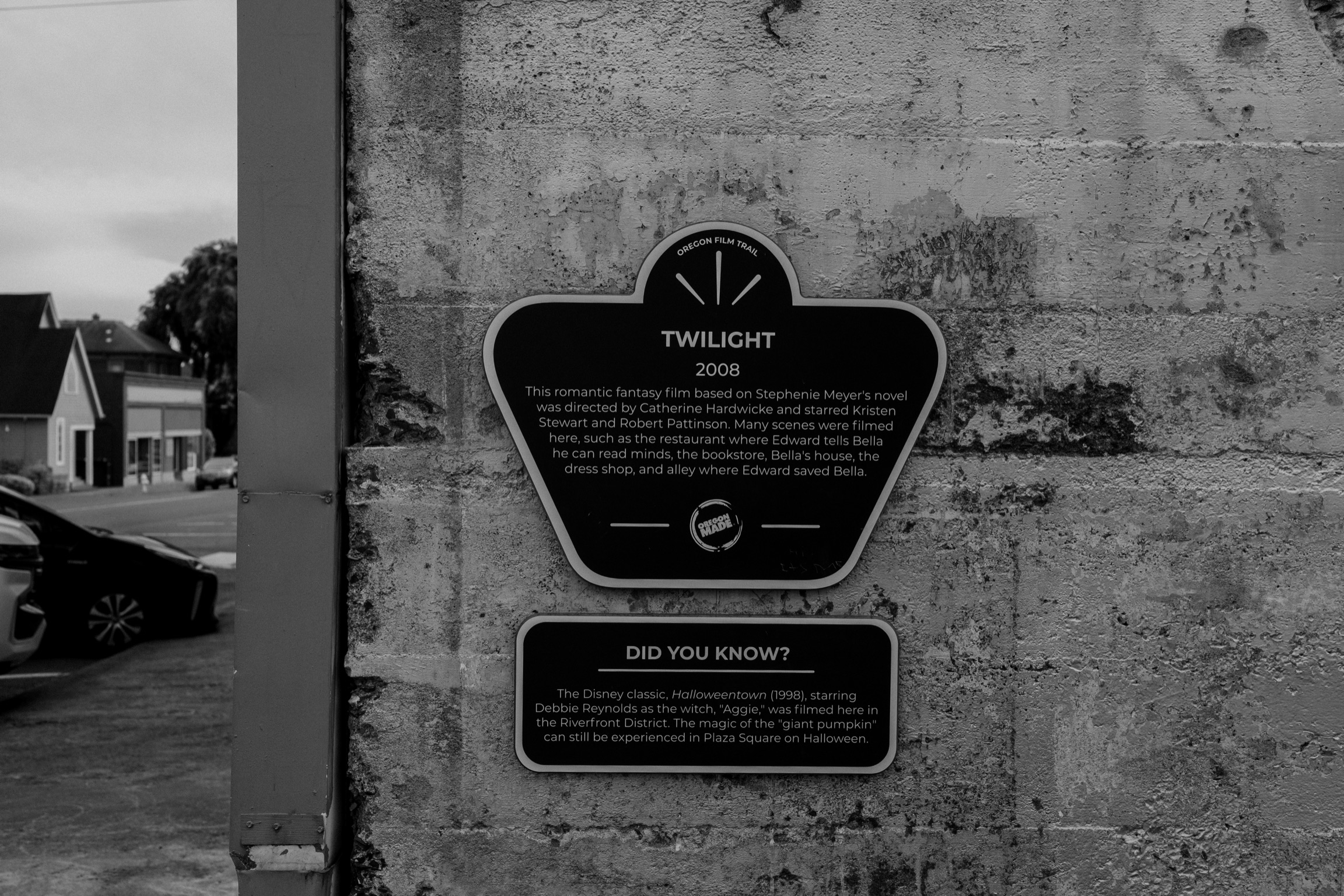
I grew up in a very small town on Oregon’s northern border called St. Helens (of volcanic renown). With a population just over ten thousand and an hourlong drive through thick forest and a mountain pass to the closest city bigger than us (Portland, believe it or not) I’d say we represented remote small town America just as well as anybody. Deep familial roots, a couple of random bragging rights (they filmed Halloweentown and Twilight here! the eponymous volcano exploded in 1980 and now the sad lumpy remains loom menacingly in the distance!), ~90% white, lack of food and shopping options. But we loved what we had.

Pictured: Campbell Park
Like many smallish rural communities in America, we also were highly dependent on a handful of arterial local industries: the Boise Cascade Paper Mill and the Trojan Nuclear Power Plant. The horrid smell of the paper mill’s sulfur byproducts would greet you as you drove into town, but for me it was a nostalgic reminder that I was home. We acquired the auspicious nickname “St. Smellins”. If you were foolish enough to complain about the stench you would get to hear the community mantra: “That’s the smell of money”.
Also like many smallish rural communities in America, we lost said arterial local industries. Trojan—the only commercial nuclear power plant in the state—closed in the 90s due to a combination of mismanagement, bad luck, and NIMBY opposition, forcing the scores of recently unemployed highly skilled workers to drive a winding commute south through Cornelius Pass to the Portland metro to work for worse wages.
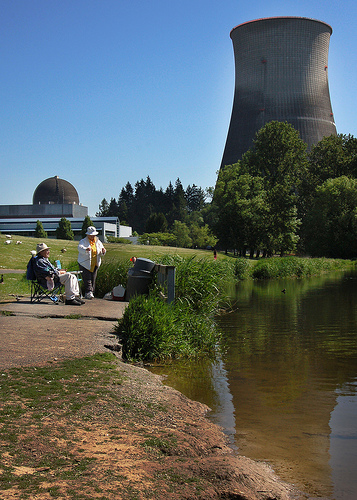
The spooky abandoned cooling tower got blown up in 2006, but its hulking visage is seared into my memory
In 2008 the paper mill “restructured”, vastly reducing its capacity and essentially shutting down (though its corpse shambled on, employing a few dozen people into the 2020s). Now a good portion of town’s recently unemployed blue collar workers were forced to drive a winding commute north up highway 30 to the industrial riverport of Longview to work for worse wages.
Oh horror of horrors, quaint St. Helens had become just another exurb full of commuters.
Now stop me if any of this sounds familiar:
In the hit indie game Night in the Woods you play Mae, a mentally ill college dropout who returns home to find her thickly forested hometown of Possum Springs is slowly hollowing out due to economic forces beyond anybody’s control. The city’s single arterial industry of coal mining has permanently ceased operation, depressing wages and causing a domino of businesses to shutter, driving those displaced to commute or move to the port city of Bright Harbor.
You can’t talk about the narrative of this game without diving into its development, which is a fascinating tragedy all by itself. The game was created as a collaboration between gamedev outsider Scott Benson (writing/design/art) and indie legend Alec Holowka (design/music/programming) with a big writing/design assist from Bethany Hockenberry. Scott and Bethany are both from the forested and industrial depths of Western Pennsylvania. Scott has explained that Possum Springs is a stand-in for Vandergrift PA, a similarly sized town to St. Helens that lost half of its population after the steel mill closed in the mid 20th century. We’ll return to the game’s developers later to tell their nonfiction story, which is important to understanding the diegetic narrative.
So I connected very deeply with the spatial aspect of the game: the cultural and ecological setting, the economic situation the town finds itself in. But I also connected very much to the temporal aspect—the stage of life Mae is in, for it very precisely matched my own (among other things, the game very visibly takes place during late October which is exactly when I started it). Mae is a college dropout returning home after some time away and finds that her relationship with her parents has unexpectedly shifted with her entry into early adulthood and her friends have all become gainfully employed, leaving her to skulk around the town and wonder what to do with herself.
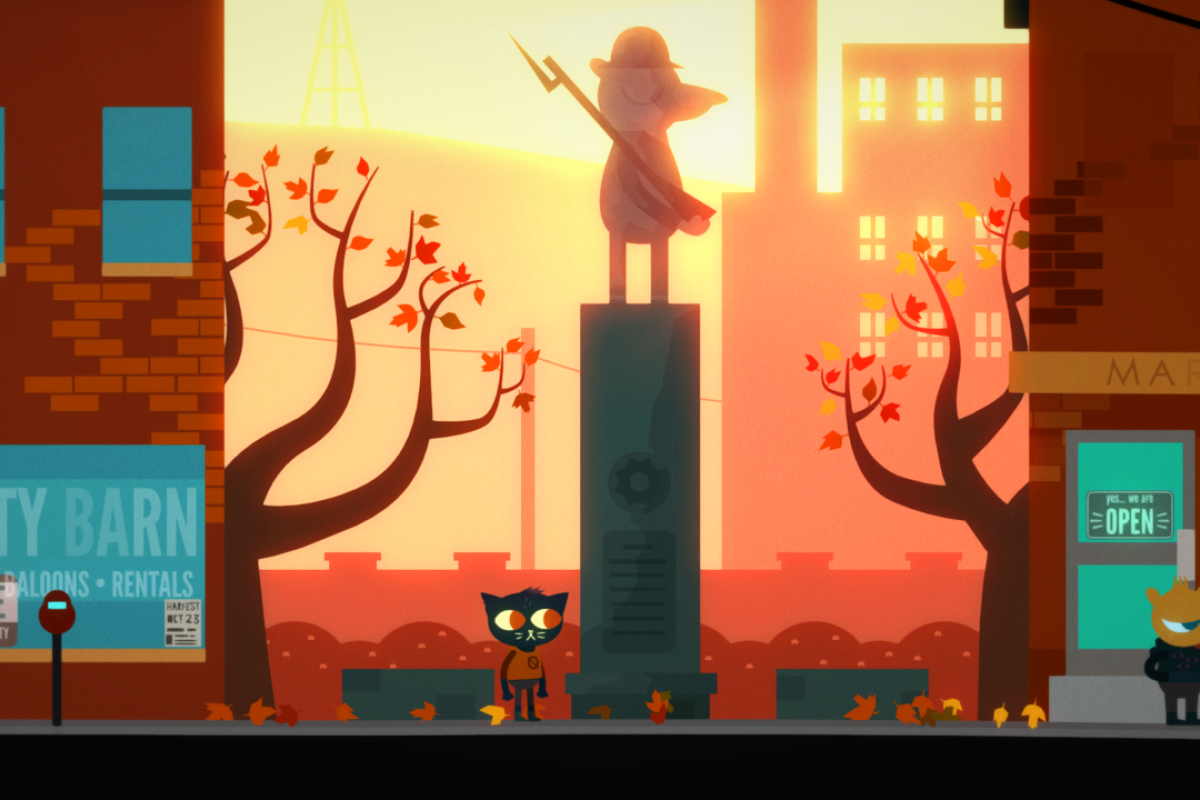
A good majority of the gameplay is wandering aimlessly in the daytime hours trying to amuse yourself while you wait for your friends to get off work
This grinding ennui was exactly what I was experiencing when I booted up the game—in fact, I had started playing precisely to escape my gnawing feelings of boredom and uselessness. I was at a tender transition period in my life: I had just completed my two year mission in the California Bay Area, and had returned to Provo, Utah (my family had moved there when I was a teenager) where I planned to attend college at the local Brigham Young University. But I was left with about two months of slack between the return from my mission and the start of my first semester of college.
Maybe to some people two months of relaxation sounds heavenly, but my mission had permanently altered my brain chemistry. Teenaged Sam had been—for lack of a better word—lazy. I often justified to myself the enormous amount of time I spent on leisure and recreation as enjoying my finite youth before it was permanently subsumed by adult responsibilities. My mission had been just that, a complete mindset flip into my adult form of permanent grindset. Missionary life is almost devoid of leisure (there are no books besides scriptures, no television, personal internet use, non-religious music, etc), highly purposeful (find people to teach) and highly social (you’re always talking to strangers, always accompanied by a companion). It was quite the unhappy shock to return home and be left to my own devices while all my friends were employed, at school, or on their own missions. After being within sight and sound of my missionary companion 24/7 for two years straight, I was suddenly, profoundly, alone.
And at the beginning of our story, so is Mae.
III: Obligatory Synopsis
Here be Spoilers.
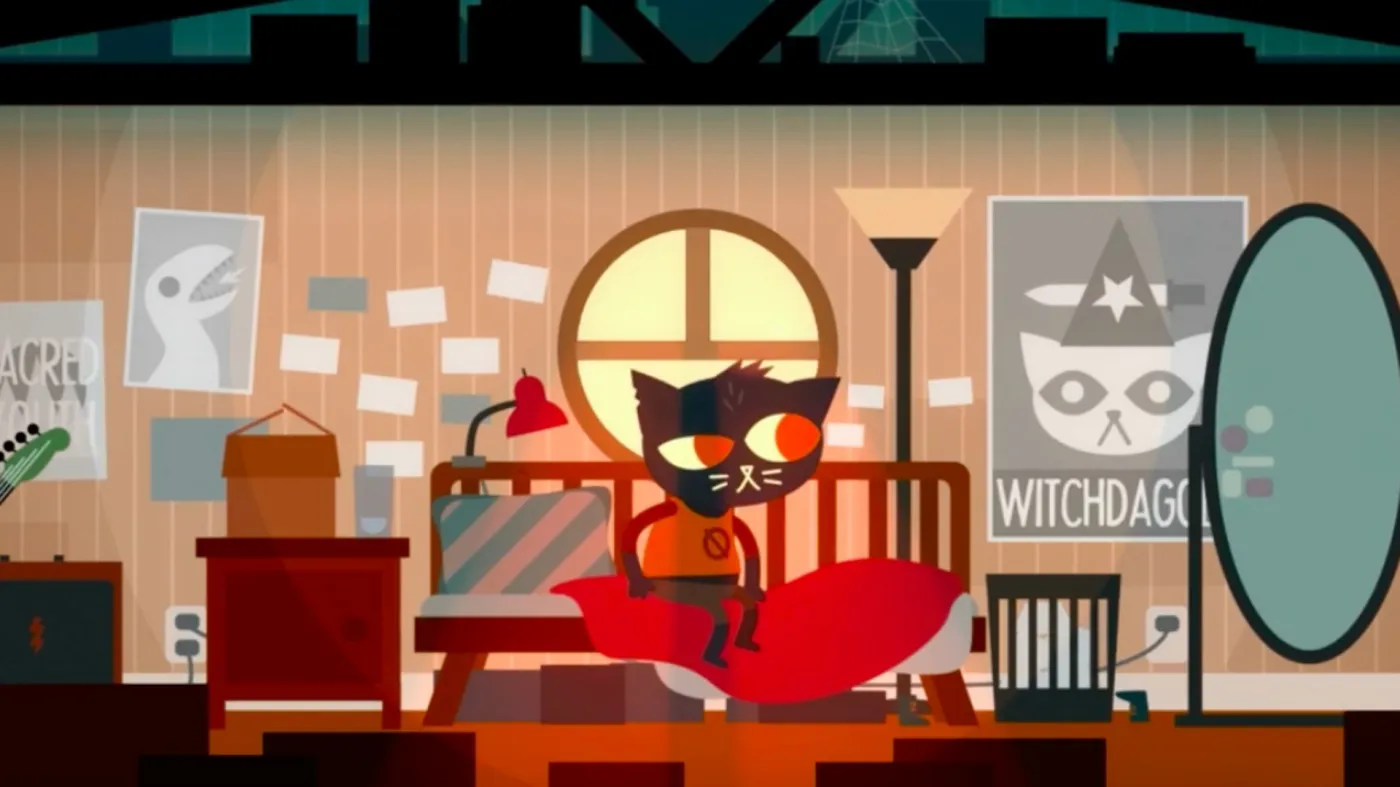
Mae Borowski has some uncomfortable questions hanging over her head when she returns to Possum Springs. The main one being: why did you come back? Getting to leave home and go to college was seen as a great success by her friends and family—escaping the hood, as it were—and now she’s back after only a year and some change. Mae is also a bit of a permanent outcast within the small town after “The Incident”: a violent episode during high school where she seriously injured a student with a softball bat in a dissociative rage. Nevertheless she has a few close friends still hanging around: Gregg—the mischievous troublemaker, Angus—his gentle and softspoken boyfriend, Bea—Mae’s highly responsible ex-bff. They come together to play in a local rock band that isn’t half bad.
Mae eagerly tries to plug herself back into this network upon her return, and finds that Gregg and Angus are beset by the twin killers of childhood friendship: employment and a significant other. Needing to show up to their day jobs as cashiers and spending what little free time they have with each other, Mae is always the odd one out. So she also tries to revive her latent friendship with Bea, who has taken over running a family business and become the “man of the house” since her mother died and her father went into a depressive spiral. She is just a tiny bit too busy to deal with Mae’s emotional issues.
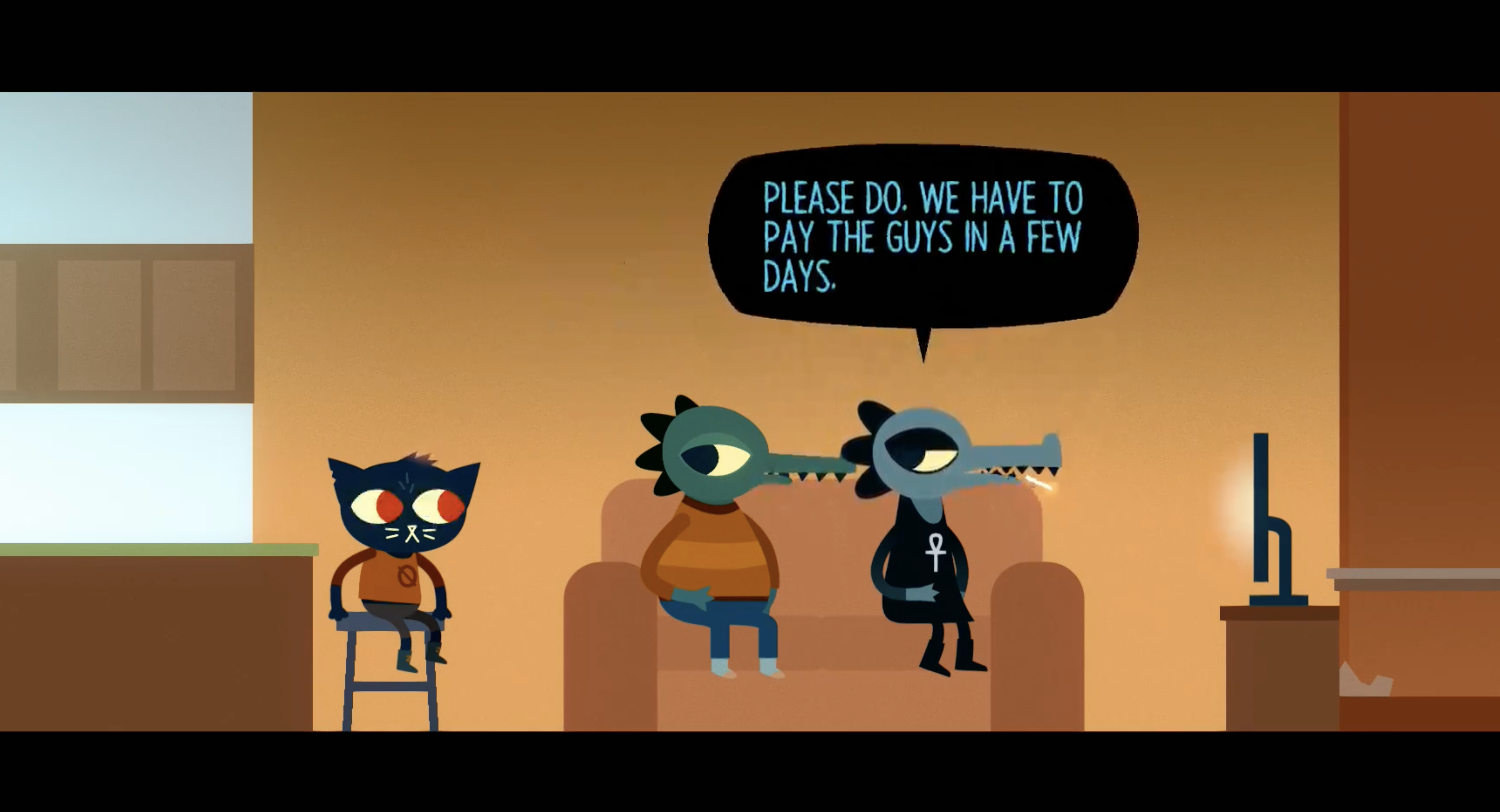
Bea’s father nevertheless likes to remind her that it is his name on the business, not hers
So Mae becomes a full-time flaneur, connecting with random residents like old schoolmates and teachers, homeless guys, a church pastor. Each evening she coaxes one of her friends to hang out with her, gets into some trouble, and then stumbles back home in the middle of the night to watch TV with her exhausted dad back from his job at the Walma—I mean—Ham Panther, play games on her laptop, and then sleep in until noon.
This rhythm of listless young adulthood is only broken up by an eldritch undercurrent plaguing the town. One of Mae’s childhood friends has gone missing. She stumbles upon a severed arm on the sidewalk. She witnesses somebody get kidnapped at a parade. Every night, her dreams are afflicted by strange visions of Possum Springs’ ancient residents playing folk music in a demented quartet in the ruins of their town’s industry, as huge glowing animals calling themselves God float through the star-choked skies. Eventually Mae becomes convinced that there is a ghost haunting Possum Springs, and enlists her friends on a Scooby Doo-esque hunt to catch it. Typical of a Scooby Doo mystery, she discovers that instead of a supernatural cause for all these strange happenings there is a more nefarious natural explanation: a cult of bereaved ex-miners have been kidnapping “undesirables”, dragging them into the abandoned mines, and sacrificing them to a supposed Lovecraftian deity called The Black Goat in some strange messed up covenant for a restoration of the status quo. She and her friends sort of accidentally foil the cult’s plans and trap them in the mines and they all live happily ever after (besides the victims that got murdered and cult members that got Waco’d). There is of course still the remaining spectre of the town’s dire economic situation, but there’s a glimmer of hope when Mae’s father mentions unionizing at the grocery store!
Wait, what?
IV: Leftism
When it comes to the developers I can’t speak for Holowka, but Benson and Hockenberry are clearly devoted leftists, so much so that they went on to found a worker co-op game studio. And wouldn’t you know it, I was also coming into my college student leftist stage at the precise moment this game reached me. So it was just yet another point of concordance, a game that affirmed my moral world.
If you have spent time ingesting any sort of mainstream Western politics then you probably have a hopelessly confused idea of what leftism even is. Leftists haven’t done a good job at dispelling these misconceptions because they can’t agree on what leftism is either and tend to focus on how they differ from each other instead of where they overlap. I’d say the modal vanilla leftist—the type that the developers and I was—distills down to three foundational stances:
- Anti-imperialism - nations should not meddle in each others’ affairs or seek to exert power over others
- Pro-welfare - nations should provide a social safety net for their citizens
- Pro-worker - the working class must express solidarity by organizing with each other in opposition to the elites rather than allowing themselves to be divided. Workers should ultimately own the companies they work for (the “means of production”)
There are many ways in which these three pillars can be expressed and extended upon, from Stalinism to Libertarian Socialism to Syndicalism to Maoism. One will notice that the most popular criticisms of leftism are quick to identify it with the worst atrocities of authoritarian communism, but I did not think (and tbh I still do not think) that these core pillars are inevitably going to lead to the USSR or CCP. True leftists can think Marx was totally right about the labor theory of value and the need for a violent revolution, but true leftists can also just moderately prefer to apply dialectical materialism and critical theory when discussing history or politics. Or maybe the right is right and this is all just a big motte and bailey to effectuate the restoration of the Soviet Union.
Speaking of the culture war, you might also notice that these three pillars do not touch on the most animating cultural issues of our day: immigration, race, sexuality, gender, religion. Leftism doesn’t necessarily opine on those subjects, though you will see very strong correlation between leftism and more libertine cultural attitudes and aesthetics. Night in the Woods is certainly in this camp. It doesn’t have much to say about race (they’re all animals, if you haven’t noticed) but it does have plot points around Gregg and Angus being a gay couple in a fairly conservative town.
All of this to say: the writers of Night in the Woods weave baby’s first leftism into every fibre of the plot with a guileless naïveté that is both endearing and a little cringe. A lot of the personal issues that the residents of the town and our main characters are suffering from have a political color to them, an undercurrent that seems to say: “Surely our issues could be simply be resolved by a better political and economic system and a little less greed?” The plot and characters valorize the miners of yore, their collective action and solidarity—for instance, an almost mythological story of the miners teaming up and pulling out the teeth of a cruel boss, and then passing those teeth down through their families as tokens of their shared identity. The rediscovered tooth is supposedly what inspires Mae’s father to unionize at Ham Panther.
At other times it’s a little more on the nose, like when a classmate delivers a slam poem that ends with:
I’ll admit I really enjoyed the game’s generalized proletarian rage the first time around. The overall vibe of the setting and characters is grounded enough, an everyman affect that manages to avoid the cliché leftist terminology of “praxis” and “liminality” and “ghouls”. But I have a suspicion—based on nothing more than the caricatures of the writers that I have formed in my head—that this is only the case because the Brooklyn podcast renaissance wasn’t in full swing yet when the dialogue was written. In retrospect, now that I’m a little older, I find it all a bit corny. There are works that manage to tread the same themes with a lot more compassion and willingness to explore contradiction instead of the bald-faced boosterism we get here. It gives the impression of an authorial assuredness that isn’t sufficiently humble to be a truly great work. At its worst moments it reeks of persuasion instead of sincerity.
But! It manages to successfully tread the waters of sincerity elsewhere.
V: Mental Illness
Mae has problems. They are not exactly well defined and they don’t suddenly become legible at the end to provide us closure. She just has problems, and they mess with her ability to do normal people things like go to college. She describes these dissociative episodes where the world around her “dissolves into shapes and colors” and everything loses meaning. It was during one of these frightening disassociations that she had the “The Incident” and beat a teammate half to death with a softball bat. It is also during one of those episodes that she flees college, hoping to get better. Maybe it—whatever it is—is an explanation for some of her disturbing dreams. She’s also clearly suffering from some major depression and anxiety, though we aren’t given enough context to know if they’re chronic or just a response to the nadir she’s found herself in. Whatever page of the DSM-5 we ought to turn to, her issues are slippery and frustrating just like all good experiences with mental illness are.
I must confess, I have been afflicted with terminal neurotypicality. I’ve had depressive episodes, sometimes I have a hard time concentrating, I get anxious. I certainly found myself in the midst of a major depressive episode when I first picked up this game, add that to the list of touchpoints. But I can’t count myself among the ranks of the people who bear these burdens at all times. I have always had difficulty empathizing with the mentally ill, to my great shame. In my own subjective experience, my destiny has almost always been in my own hands. My emotional state does not often align with my goals, but my animating force of agency exists separately from my emotions, even if it is susceptible to their influence.
So I find myself drawn to these type of stories as a sort of self cultivation. Inhabiting a world of dire mental illness through the power of narrative can help shape me into a more empathetic person. I found The Metamorphosis by Franz Kafka to be an unexpectedly challenging read but it ultimately resonated with me how much pain it causes Gregor to know he is the subject of only either pity or disdain. I tremble at the thought of being a burden. Mae is going through something quite similar as she returns to her childhood haunts, but she copes with it by burying her pain deep inside herself and avoiding talking or thinking about it. Realistic for a 19 year old I suppose.
Remember when I said we would talk more about the developers later? Now is later.
I’m not sure the exact degree to which Alec Holowka directed the plot. He doesn’t have a writing credit, but in a collaboration that intimate you are bound to exert some influence on all parts of the final product. Alec was very interested in mental illness. He ran a podcast (with a profane name that I shall not utter on this Christian blog) that exclusively interviewed people about their experiences with mental illness. He was very interested in having a positive impact, on the gaming industry and on society as whole. His podcast is rather grandiosely described as “breaking down the stigma one interview at a time”. Scott Benson too has been open about the fact that he suffers from bipolar disorder, anxiety, and PTSD. It seemed predestined that this story would tread these themes.
Then the themes turned nonfictional.
In the window between the official and physical releases of the game, Alec’s image soured. Allegations of physical and emotional abuse started coming out. First, from perennial gaming controversy lightning-rod Zoë Quinn. Then from others. Scott and Bethany released a coldly worded statement distancing the studio and project from Alec. Within days, he was dead by suicide.
If you’ve never heard of Gamergate, do yourself a favor and go on living the rest of your life without learning about it. No, seriously. Don’t click the link. No matter which side of the argument you fall on, learning about its twists and turns will only leave you sadder and madder than before. Let it suffice to say that this incident got immediately sucked into the broader Gamergate discourse as yet another theatre of war. On one side was a diffuse group of culture warriors who thought Alec the true victim here, abandoned and driven to a death of despair by the excesses of cancel culture. On the other side seemed to be many who personally knew him. Scott wrote up a post a little bit after Alec’s death sharing his experiences with him. It’s pretty long, detailing the run up to his big breakdown and the fallout from it and how it threw the game’s development into chaos. The real meat of the accusations really boils down to these two paragraphs:
After that, he becomes sullen and non-communicative and mostly abandons Scott and Bethany to pull the game over the finish line by themselves. But then he seems to take a turn for the better! He gets his meds tuned, mends at least some the bridges he has burned, attends therapy and starts his mental health podcast. It’s described by Scott as a miracle.
Then the other allegations come out.
And then he’s dead.
Alec was unwell, there is no denying that. And so is Mae. Is it just moral luck that she did not happen to hold any power over others to enable her unwellness to turn into abuse? Isn’t physically beating somebody and sending them to the hospital—as Mae canonically did—just as worthy of a callout post and cancellation as Alec’s actions? How much extra patience must we afford someone with a mood disorder? How much lesser accountability must we assign them? For any character—or player for that matter—to treat Mae as sympathetic requires an act of grace and forgiveness that our own world denied Alec. These questions are positively demanded by Night in the Woods‘s metafiction, but remain sorely unaddressed by its fiction. Mae gets a happy ending. Alec didn’t.
VI: Authenticity
I had been out of St. Helens for almost 8 years by the time I played the game. Possum Springs made me ache for the town I remember. A place where you are likely to run into people you know all around town, where everybody shops at the same few stores (Walmart), eats the same ice cream (Dari Delish), swims at the same pool (Eisenschmidt). St. Helens’s population hasn’t gone into decline—thank goodness—but it hasn’t exactly grown a ton either. Nevertheless, whenever I return I feel like something has been lost. Maybe it’s simply the rose tinted glasses of childhood nostalgia, but the town I remember had that feeling of community. You know, the one that everyone is always complaining is missing. We had it. Now it feels like we (can I say we? I haven’t lived there for a decade and a half now) don’t have it.

Manufacturing Authenticity
In The City Authentic, David Banks explores how the pressures of the attention economy have led cities to peddle their “authenticity” as product to be consumed, becoming hollow façades hyperoptimized for social media content. You may have noticed tourist zones have grown increasingly focused on commodifying “local culture”. The shenanigans of the French Quarter and the Strip may have started as genuine expressions of local mores, but they’ve long morphed into cynical performances for jetsetters. The Millennials and Zoomers caught on to this and sought more lowkey local experiences, unwittingly spawning 1000 French Quarters for every midsized town in America.
St. Helens is no stranger to this. We used to have a pretty silly tradition honoring the fact that Halloweentown was filmed there: each business would dress up a scarecrow and put it out front. But something started in the mid 2010s. Nostalgic 90s kids began to make pilgrimages to the real life Halloweentown and overselling their experiences there on Instagram and Facebook. Love it as I may, I can’t deny that St. Helens is a pretty boring tourist destination. But these hype social media posts have created a demand for something to actually happen in the town, and this deindustrialized backwater is salivating for tourist dollars. So began the increasingly over-the-top Spirit of Halloweentown Festival.

This is only 1/4 of the lineup!
My beloved childhood memories are of 4th of July fireworks and parades, the 13 Nights on the River summer concert series, the glowing candy cane tinsel sculptures the public works would bolt onto every other powerline pole in December. Singing in the community choir, acting in community theatre, bouncing between churches with pianos to take piano lessons near wherever my family needed to be that day. Picking strawberries by the fairgrounds, sleeping in adirondacks on campouts to stay out of the rain, carrying my bicycle on my shoulders over the inexplicable 15 feet of unpaved wetland that separated two dead end roads on the way to my best friend’s house. Free government provided lunch in the summer courtesy of the town’s poverty level, hot days where they’d open up the roof at the pool, walking home barefoot from barbecues at Campbell Park, playing on the commemorative World War I howitzer that was later stolen and made reoperable by an eccentric weapons collector.
NOT THE DISNEY CHANNEL ORIGINAL FILM “HALLOWEENTOWN”!!!
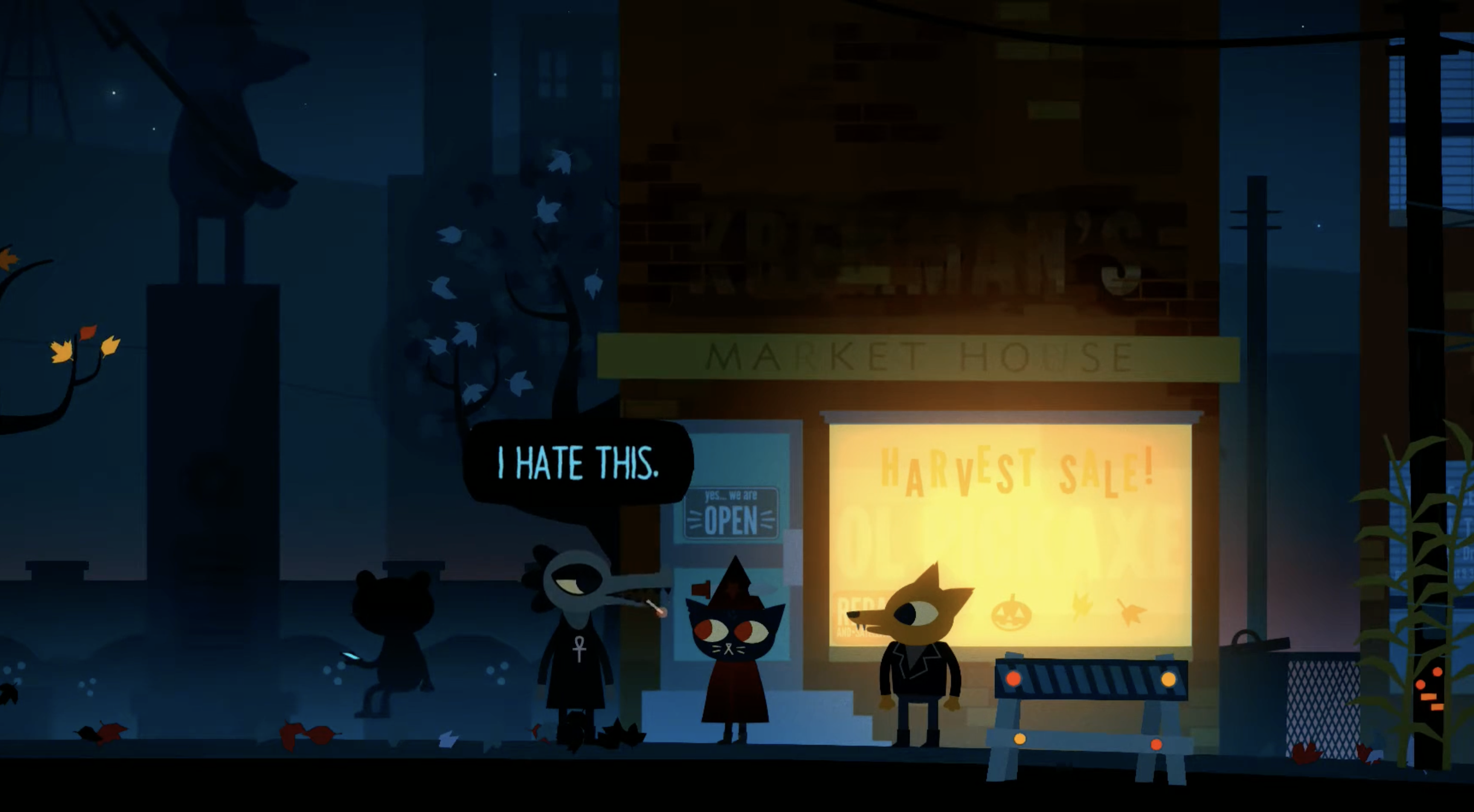
One gets the feeling by the end of the game that Possum Springs’ beloved tradition of Harfest is already starting to commercialize. Somebody is going to roll through and make a tell-all true crime podcast about the events that transpired in the abandoned mines and turn them into a tourist spot with an online merch shop. One gets the feeling that the old Possum Springs is on life support and the new Possum Springs is going to be a taxidermy.
National Politics and the Internet
I think one of the things that has defined the unique vibes of small semi-isolated communities since the beginning of time has been their, uh, smallness and perhaps… their semi-isolation. They manufacture a one-of-a-kind culture that is thoroughly rooted in local concerns. This of course has some failure modes, like treating outsiders that look or act different with hostility.
Nowadays it feels like we (can I call us we? I couldn’t even drive when I left. I never had a St. Helens address on my license) largely solved the insular prejudice but at the cost of any individual identity. We have done this by participating in the national conversation, a very important and yet largely irrelevant series of scissor statements for us to get upset about.
There’s this scene in Eddington where a large group of several dozen young folk—swept up in the heady days of the George Floyd protests—demonstrate on their town’s main street. The entire county police force (a sheriff and two deputies) shows up to it and learns that they are being personally accosted for the national ills of police brutality and racial prejudice, even though one of the deputies is one of the only Black men in the county and they live in an extremely peaceful and high-trust community. Such is the power of the national conversation: it is omnipresent, ever-demanding of your attention and your praxis. Voters follow national elections with far more fervor than municipal ones, even though the odds are good that municipal policy is going to more directly affect your life than whatever hijinks they’re up to in Washington.
The internet is once again the reason for this, of course. It’s a homogenizing factor. It allows niche subcultures to thrive, it killed the media monoculture of the TV and radio era, and yet it has created a new sort of a monoculture: a gradual smoothing of social and political diversity into one big national—even global—glob. Small towns are less weird than they used to be, for better and for worse.
The oldtimers of Possum Springs feel like quirky locals, but the youth feel like Americans.
VII: My Rating
What, you still want to hear my rating for the game? I just spent the last several thousand words explaining why I’m hopelessly biased and ought to recuse myself from this particular criticism. You really still want to hear my diagnosis?
It’s funny, the review that originally convinced me to purchase the game was this one by Shammy all the way back in April of 2017. I had totally forgotten its contents by the time I actually got around to playing in late 2019, but I decided to rewatch it in the middle of writing my own review. And that scoundrel totally jacked my swag! Shammy mentions that NITW hit particularly hard because Mae’s situation very closely mirrored their own, from the small town Americana to the mental illness to the dropping out of college and lack of purpose or direction. It’s spooky that we seemed to like the game for many of the exact same—deeply personal—reasons.
I was really convinced that this game was a masterpiece after my first playthrough. So when I started dating my now-wife-then-girlfriend, I insisted she play it through as a part of my greater project to convince her that games were transcendental art. Back then she was in the girlfriend stage and humored my dumb requests, so play it she did. As I watched her slog through the repetitive dream sequences, struggle with the floaty movement controls, muddle through the lame ending that undercuts many of the core themes of the character drama by tying the plot up with a tidy bow—I realized this game was not a masterpiece. It is just a piece. A piece of flawed media with a troubled development story and a distracting culture war metafiction and an incredibly sharp appeal to a very certain type of player.
So I rate it 10/10 for small town joes feeling adrift in their early 20s. If that describes you, I don’t think a piece of media could possibly be more tailored for you specifically. If it doesn’t, it’s like a 7/10. It has a lot of incredibly distracting design flaws and a fairly poor sense of pacing that makes it difficult to want to pick up again after a break. It also has great art, great music, and is occasionally touching and hilarious.
I’m glad it exists. I’m glad I was able to experience both sides of it because it helps me begin to empathize with people who defend their favorites from criticism despite their sometimes obvious flaws. That was me. But my life kept on moving from that moment in late autumn of 2019. I changed, and St. Helens has changed too. But Night in the Woods stayed the same.
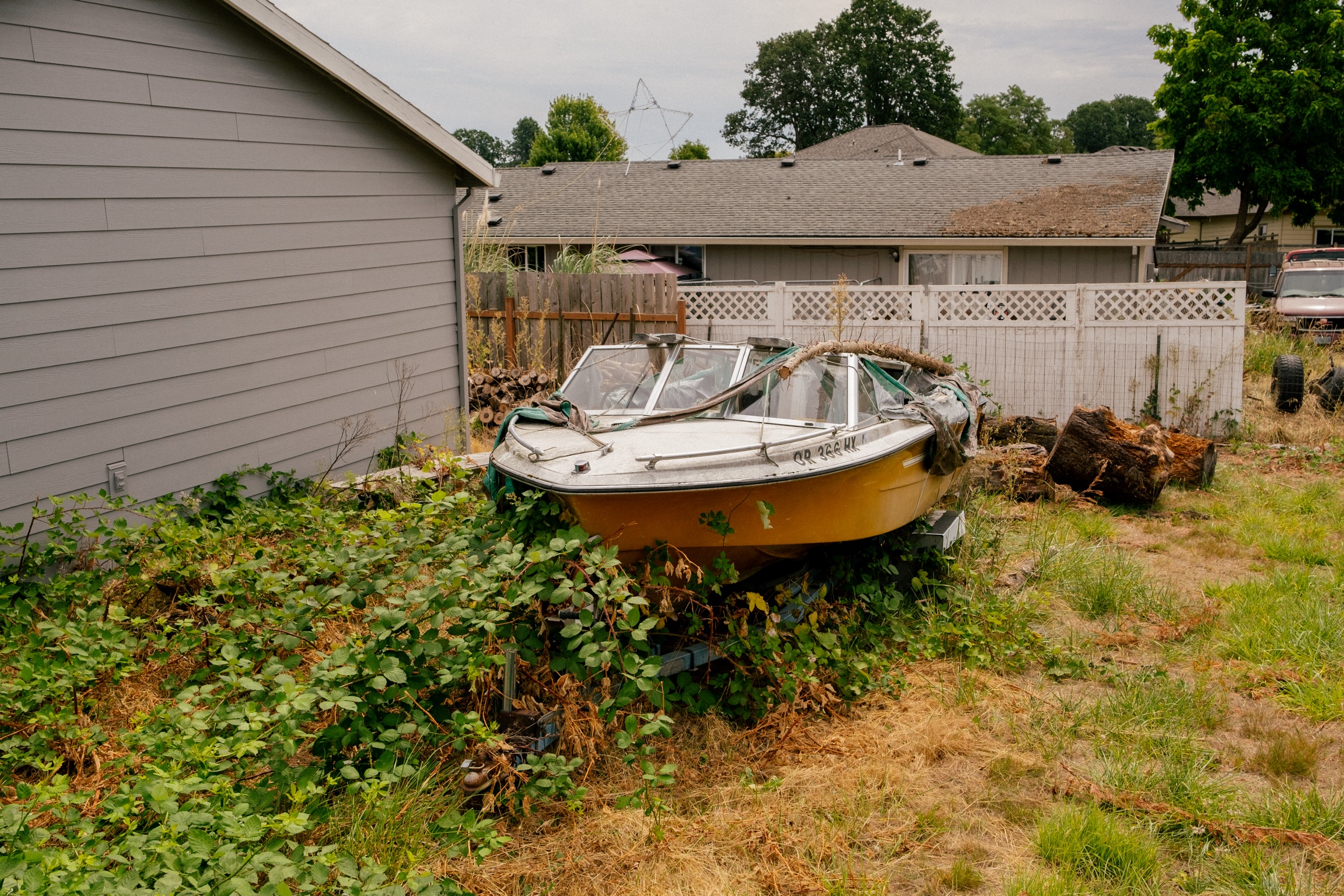
this ugly beast sits in my childhood yard now